
Vidya Setu
Two Technology-Enabled Models ‘Each To Teach’ & ‘Jigyasha’ for an Equitable, Experiential and Future-Ready Bharat
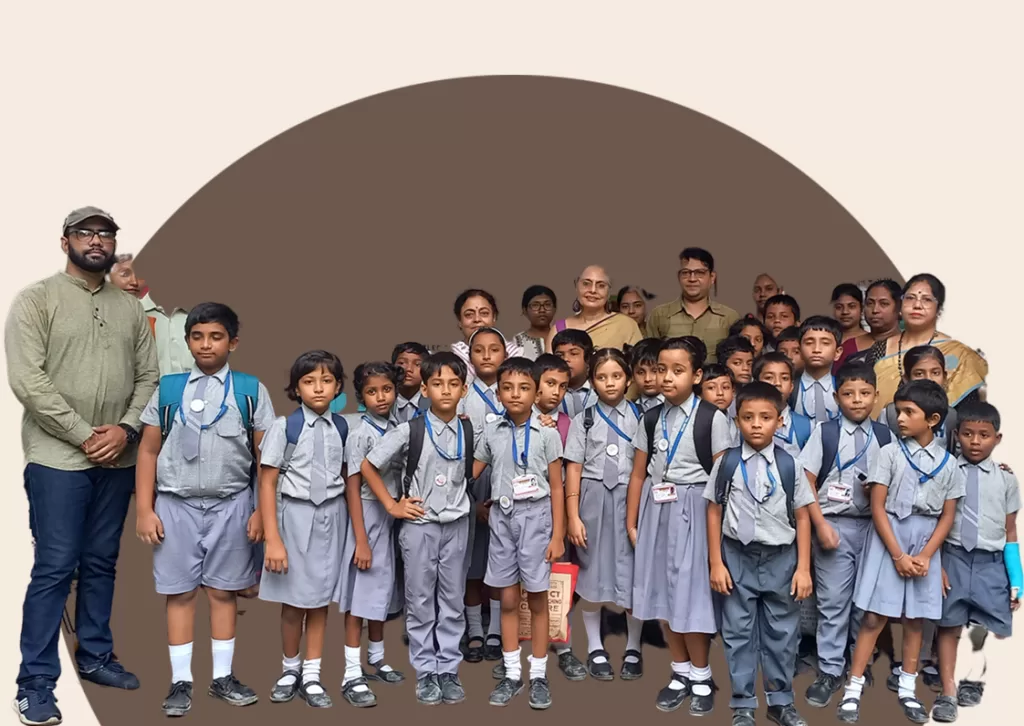
Connecting One Urban School to One Rural School
- What if India’s Best Schools could Help Build India’s Next Generation of Rural Schools?
- What if the Knowledge inside India’s Finest Classrooms could travel far beyond their walls?
- What if an Urban Student could become the Mentor of a Rural Child?
- What if an Experienced Teacher from a Leading Urban School could enter a Rural Classroom every week, not physically, but through Technology and demonstrate, in real time, how modern Experiential Learning is delivered?
- What if the Rural Teacher could watch, learn and grow alongside the students?
- What if none of this cost the rural child, the rural school or the participating teacher a single Rupee?
- This is not a concept on paper.
- This is the Pathanam model.
- For five years, Pathanam, in collaboration with The Education Trust, has been working to create precisely this bridge between India’s urban educational capability and its rural educational need.
- Not by replacing rural schools.
- Not by replacing rural teachers.
- Not by creating another parallel education system.
But by connecting Schools, Students, Teachers and Technology.
Two Models Power The Above Vision
Each To Teach
One Urban Student → One Rural Student
Jigyasha
One Urban Teacher → One Rural Classroom
Together, they attempt something far bigger than online education.
THEY TURN EDUCATIONAL PRIVILEGE INTO EDUCATIONAL PARTICIPATION.
THE REAL DIVIDE IS NOT BETWEEN URBAN AND RURAL CHILDREN.
India’s children do not have different levels of potential because of where they are born.
But they can have radically different levels of exposure, opportunity, pedagogy, technology and mentorship. A child in a leading urban English medium school may grow up surrounded by:
EXPERIENCED TEACHERS
TECHNOLOGY
ENGLISH
EXPERIENTIAL LEARNING
DIGITAL EXPOSURE
MENTORING
COMMUNICATION
CONFIDENCE
- A child in a rural primary school may have the same curiosity and potential but far less access to these opportunities.
- This is the divide Pathanam seeks to address.
- Not by asking rural children to leave their schools.
- But by bringing new educational relationships into their schools.
The Pathanam Idea
Don’t Build A Wall between Two Educational Worlds
BUILD A BRIDGE
India already has extraordinary educational resources.
- The teachers exist.
- The students exist.
- The schools exist.
- The technology exists.
The question is:
CAN WE CONNECT THEM?
Pathanam’s answer is Yes.
Its Knowledge Management System (KMS) provides the technology layer through which urban and rural schools can participate in a structured, sustained learning ecosystem.
The objective is simple:
One urban school should not merely educate its own children. It should have the opportunity to help one rural school grow.
That is the foundation of Pathanam’s School-To-School Model.